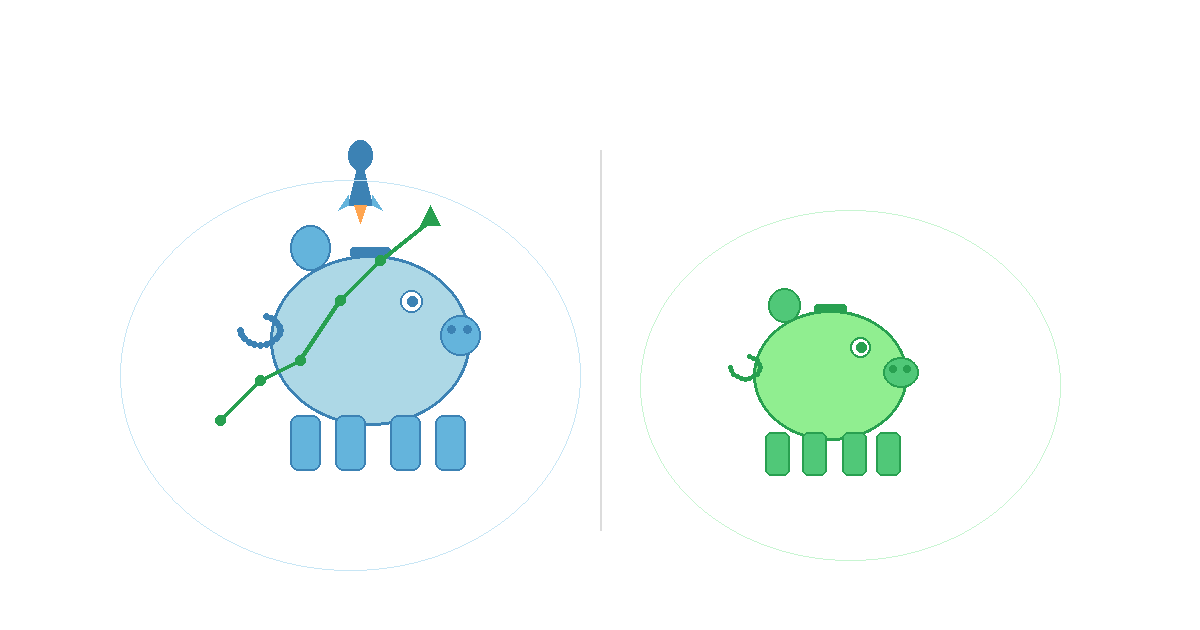
If you have been keeping your savings in the same bank account for years, there is a good chance your money is barely growing. High-yield savings accounts offered by online banks have become one of the most straightforward ways to earn meaningfully more on cash you are already holding. This guide compares high-yield savings accounts against traditional bank accounts, covers the key differences in rates, features, and protection, and helps you decide which option fits your financial situation.
What Is a High-Yield Savings Account?
A high-yield savings account (HYSA) is a savings account that pays a significantly higher Annual Percentage Yield (APY) than a standard savings account. Most HYSAs are offered by online banks — institutions that operate without physical branch networks, which allows them to pass on cost savings as higher interest rates to depositors.
APY (Annual Percentage Yield) represents the total amount of interest you earn in a year, accounting for compounding. It is the number you should use when comparing savings accounts because it gives an apples-to-apples view of real return.
The Core Difference: Interest Rates
The gap between traditional and high-yield savings accounts is significant. As of mid-2026:
- Traditional bank savings accounts: Typically 0.01% to 0.10% APY
- High-yield savings accounts: Typically 4.00% to 5.00% APY (varies with Fed rate environment)
That difference is not trivial. On a $10,000 balance:
- At 0.01% APY (traditional): you earn $1 per year
- At 4.50% APY (HYSA): you earn $450 per year
Over five years with consistent contributions, the compounding difference adds up to thousands of dollars. For emergency funds, short-term savings goals, or cash reserves, a high-yield account is almost always the better vehicle.
Need short-term funds while your savings earn high yield? Compare Personal Loan Options →
Top High-Yield Savings Accounts in 2026
Several online banks consistently offer competitive rates. Here are some of the leading options:
- Marcus by Goldman Sachs: Competitive APY, no minimum deposit, no fees, no maximum balance limit
- SoFi Bank: High APY for members who receive direct deposit, plus access to checking and other financial products
- Ally Bank: Consistently competitive rates, no minimum deposit, well-regarded mobile app and customer service
- American Express High Yield Savings: No fees, no minimums, APY typically in line with top market rates, backed by a major institution
- Synchrony Bank: Often among the highest APYs available, no minimum balance requirement, option to add an ATM card
Traditional Banks: Strengths and Weaknesses
Major traditional banks like Chase, Bank of America, and Wells Fargo offer rates that are dramatically lower than online competitors. Their savings account APYs often sit at 0.01% — a rate that has not moved meaningfully even during periods of significantly higher Fed rates.
Where traditional banks have an edge:
- Physical branch access: In-person service for complex transactions, cashier’s checks, notary services, and safe deposit boxes
- Full-service banking: Mortgages, auto loans, investment accounts, and business banking often integrated under one roof
- ATM networks: Extensive proprietary ATM networks and cash deposit capabilities
- Familiarity and trust: Long-established relationships and brand recognition
Where they fall short:
- Dramatically lower interest rates on savings
- More frequent fees (monthly maintenance, minimum balance requirements)
- Less competitive rates on CDs and money market accounts
Side-by-Side Comparison
| Feature | High-Yield Savings (Online) | Traditional Bank Savings |
|---|---|---|
| Typical APY | 4.00% to 5.00% | 0.01% to 0.10% |
| FDIC Insurance | Yes (up to $250,000) | Yes (up to $250,000) |
| Minimum Deposit | Usually $0 | Varies ($0 to $500+) |
| Monthly Fees | Typically none | Often $5 to $15 (waivable) |
| Physical Branches | No | Yes |
| ATM Access | Limited or fee-reimbursed | Extensive proprietary network |
| Mobile App Quality | Generally excellent | Varies; usually solid |
| Transfer Speed | 1 to 3 business days | Often same-day within bank |
| Full-Service Products | Limited (varies by bank) | Full suite (loans, mortgages, etc.) |
Are High-Yield Savings Accounts Safe?
Yes. This is one of the most common concerns people have about online banks, and it is worth addressing directly.
FDIC insurance covers deposits up to $250,000 per depositor, per institution — at both online banks and traditional banks. As long as you verify that your online bank is FDIC-insured (look for the FDIC logo and confirm at fdic.gov), your money is equally protected regardless of whether the bank has a physical branch. Marcus, Ally, SoFi, American Express Savings, and Synchrony are all FDIC-insured.
The FDIC has insured deposits since 1933, and no depositor has ever lost a single penny of insured deposits due to bank failure.
When a Traditional Bank Makes More Sense
Despite the rate disadvantage, traditional banks are still the right choice for certain situations:
- You regularly deposit cash. Online banks typically do not accept cash deposits. If you handle physical cash frequently, a traditional bank is necessary.
- You need in-person service. Complex transactions, medallion signature guarantees, or safe deposit boxes require physical locations.
- You want all accounts in one place. If you have a mortgage, auto loan, and checking at the same institution, the convenience of a single relationship may outweigh the rate difference on savings.
- You prefer phone or in-person customer service. While online bank customer service has improved significantly, some people prefer walking into a branch.
The Best of Both Worlds: Splitting Your Banking
Many people find that a combination approach works best. Keep a checking account and minimal float at a traditional bank for everyday transactions, bill pay, and ATM access. Move your savings, emergency fund, and any cash you are accumulating toward a goal into a high-yield savings account at an online bank.
Transfers between your traditional checking and your online savings account take one to three business days, which is enough friction to prevent impulse spending from your savings — while still being accessible when you truly need it.
To explore savings-related financial products and compare your options, visit our savings resource center for current rate comparisons and guidance.
Need Cash While You Save?
Moving to a high-yield savings account is a smart long-term move. If you face an unexpected expense in the meantime, a personal loan can cover it so your savings stay intact.
Affiliate disclosure: We may earn a commission if you apply through our link, at no extra cost to you.
A personal loan is often cheaper than pausing your savings contributions. Check Your Loan Rate →
Related Reading
Frequently Asked Questions
Do high-yield savings account rates change over time?
Yes. Most HYSA rates are variable and move in response to Federal Reserve interest rate decisions. When the Fed raises rates, HYSA APYs typically increase; when the Fed cuts rates, they decrease. Traditional savings account rates at large banks, by contrast, tend to remain near zero regardless of the rate environment — they are slow to pass rate increases to customers. This means the gap between HYSAs and traditional accounts can narrow in low-rate environments, but HYSAs have consistently offered better rates across all rate cycles.
How long does it take to access money in a high-yield savings account?
Transfers from an online savings account to an external checking account typically take one to three business days via ACH transfer. Some banks offer faster options. This is slightly slower than moving money between accounts at the same traditional bank, but most people find it acceptable for a savings account, since the money is not needed for daily transactions. For true emergencies, keeping a small buffer in a linked checking account eliminates any concern about transfer timing.
Is there a tax difference between the two account types?
No. Interest earned in any savings account — whether at an online bank or a traditional bank — is taxable as ordinary income at the federal level and in most states. You will receive a 1099-INT form if you earn $10 or more in interest during the year. The fact that an HYSA earns significantly more interest means you may have a larger tax bill, but that is simply because you earned more money. The net return after taxes still heavily favors the high-yield account in most cases.